How to plan your finances, step by step
20 November 2026 · 15 min · Inbestors
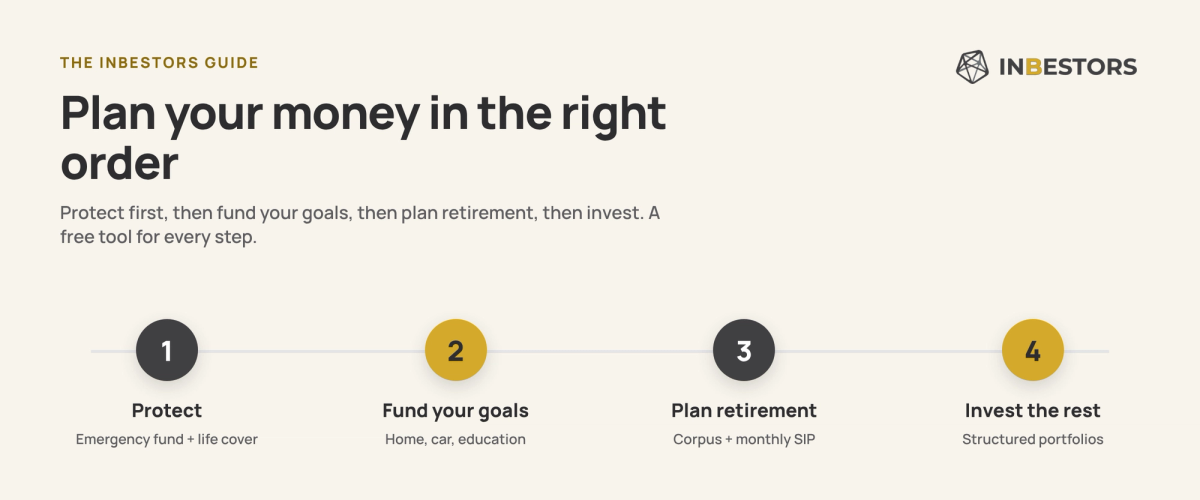
Most people invest before they are ready, or plan in bits. There is a simple order to money: protect first, then fund your goals, then plan retirement, then invest the rest well.
Ask ten people how to handle their money and most will jump straight to "which fund" or "which stock." That is starting in the middle. Good financial planning is not about picking the one clever investment. It is about doing a few ordinary things in the right order, so that one bad year cannot undo the rest.
There is a simple sequence: protect what you have, fund your goals, plan for retirement, and only then invest the surplus well. Do them in that order and the whole plan holds together. This guide walks through all four, and points you to a free tool and a deeper guide for each step.
Why the order matters more than the fund
Returns get all the attention, but the order is what keeps you invested through a rough patch. If a job loss or a medical bill forces you to sell your investments at the worst time, it does not matter how good the fund was. Protection and planning are what let your money compound uninterrupted. So we build from the foundation up, not from the shiniest idea down.
Step 1: Protect what you have
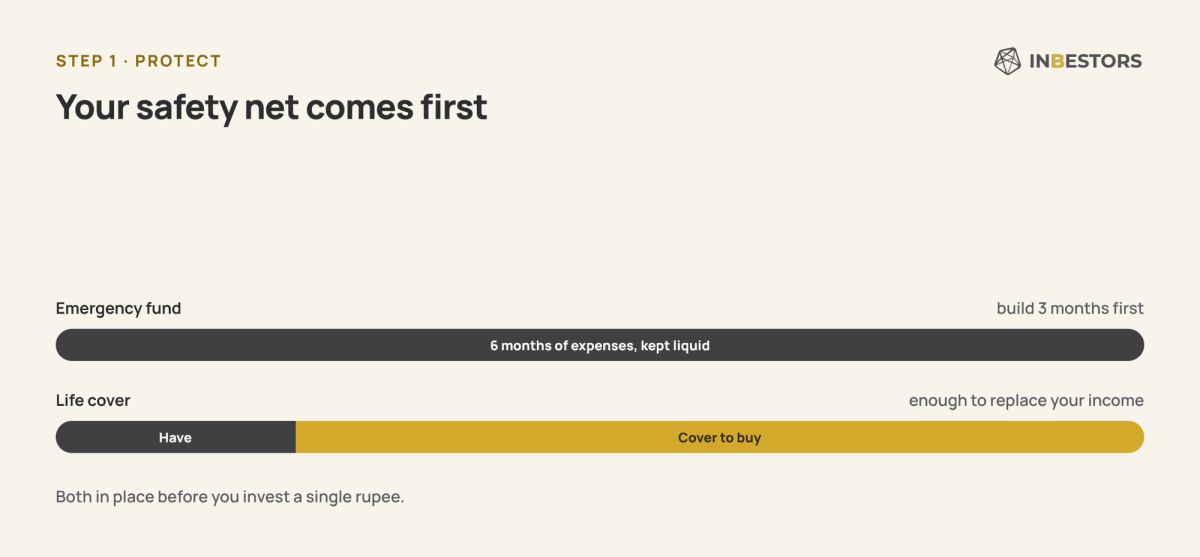
Before investing a single rupee, two things should be in place. An emergency fund worth three to six months of expenses, kept in a liquid fund you can reach in a day. And enough life cover, if anyone depends on you, to replace your income so your family can carry on. These are not exciting, but they are the floor everything else stands on.
Work out both in two minutes with the Risk Planner, or read the full method in emergency fund and life cover, explained.
Step 2: Fund your life goals
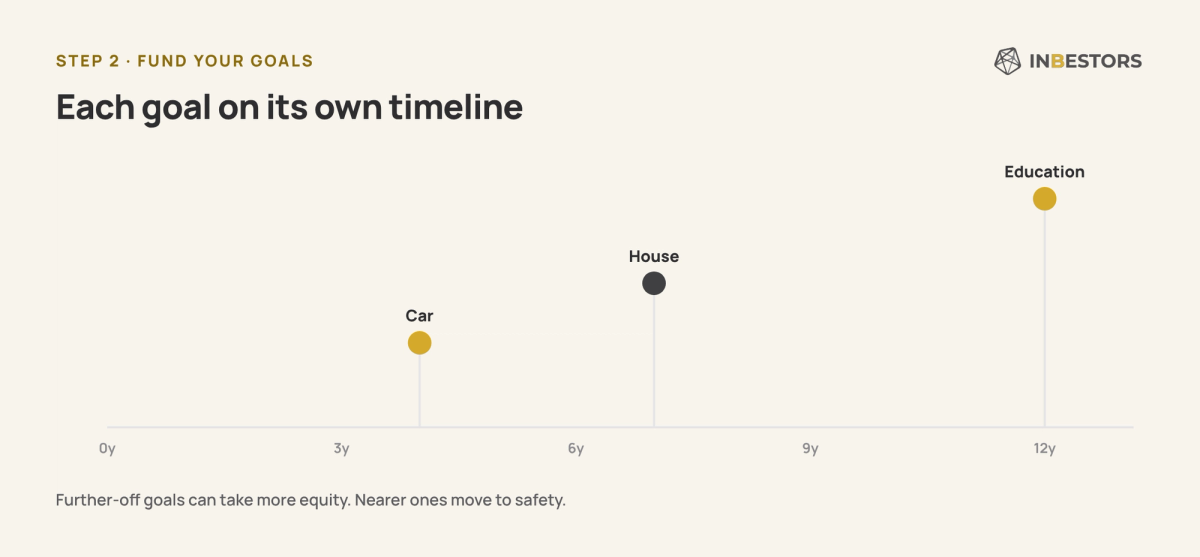
Next, your real goals: a home, a car, a child's education, a long holiday, help for ageing parents. Each has its own cost, its own date, and its own comfort with risk. The method is the same for all of them: take today's cost, add the right inflation, match how you invest to how soon you need the money, count what you have already saved, and fill the gap with a monthly SIP.
Plan every goal at once with the Goal Planner, or read how to plan your money goals, step by step.
Step 3: Plan for retirement
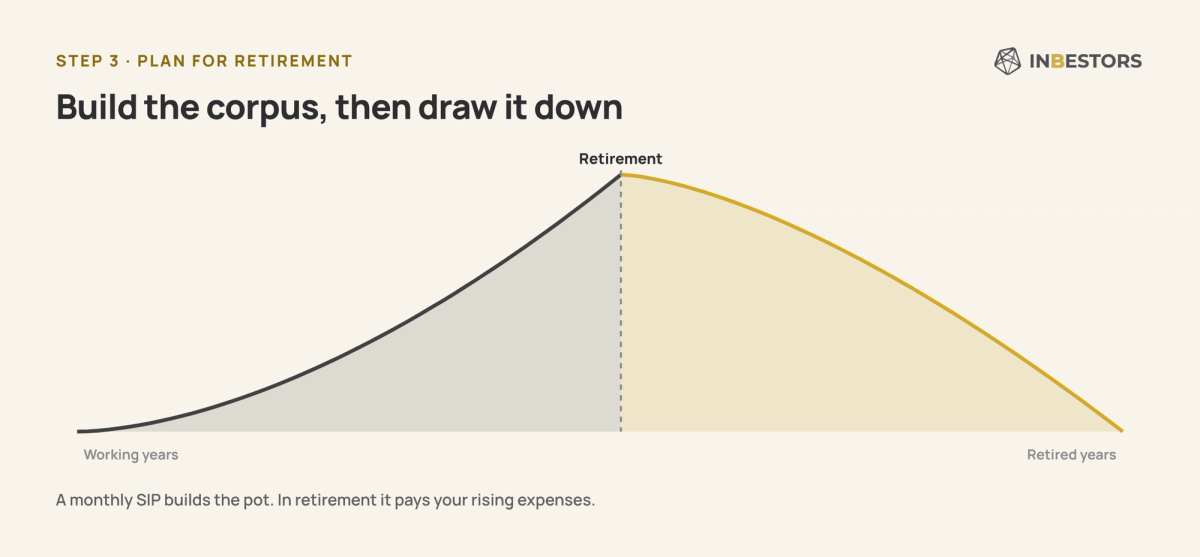
Retirement is a goal too, but a special one, because you are replacing an income for decades rather than paying a one-time cost. The job is to work out the corpus you will need on the day you retire, big enough to cover rising expenses for the rest of your life, then fund the gap with a monthly SIP that ideally steps up a little each year.
Find your number with the Retirement Planner, or read how to plan for retirement, the simple version.
Step 4: Invest the rest, with structure
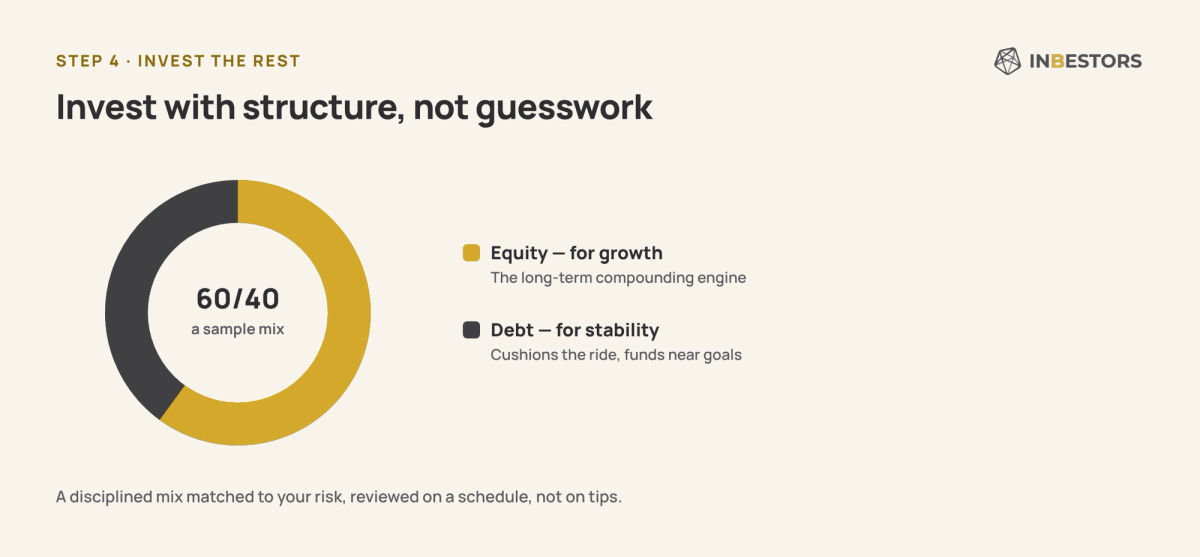
Only now does the "which investment" question make sense, and even here the answer is structure, not guesswork. Once your safety net and goals are funded, the surplus is what builds real wealth. The mistake most people make is chasing tips and switching constantly. The better path is a disciplined, research-backed set of model portfolios matched to your risk, reviewed on a schedule rather than on a whim.
That is the part we do for a living. You can see how we think about it on our investing approach and model portfoliospages. Process over prediction, structure over speculation.
Put it together, and review once a year
You do not have to do all four at once. Start at the top: get the safety net in place, then the nearest goals, then retirement, then invest what is left. The one habit that keeps it honest is a quick yearly review, because incomes, costs and goals all move over time.
Start with your own numbers
Every step above has a free tool that does the maths for you, no sign-up, nothing stored:
- Risk Planner — your emergency fund and life cover
- Goal Planner — the SIPs that fund your goals
- Retirement Planner — your retirement corpus and SIP
If you would rather be walked through it, join our free weekly webinar, where we build a plan like this live and answer your questions. Or book a call with an advisor and we will start at step one with your real numbers.
Start where it makes sense for you
Join the Saturday webinar
Live, weekly. A ₹999 seat, for people serious about changing how they invest. No pitch.
Register ›Join the community
Market notes, webinar recaps, and questions answered on WhatsApp.
Join ›Talk to us
Prefer to ask first? Reach us on call, WhatsApp or email and we'll walk you through it.
Get in touch ›